MADINA
Client
- Self-directed
Project type
- Civic Participation Platform
What I did
- Next.js 16
- React 19
- TypeScript
- Tailwind CSS v4
- SQLite (node:sqlite)
- Leaflet
- Claude API
- Zod
- Installable PWA
- AR (RTL) / FR
Year
- 2026
Overview
MADINA (مدينة, “city”) is a self-initiated platform that turns a resident's concern about a public space into a project the whole city can follow. A garden, a square, a pavement or a street light is reported from a phone in six steps. Coordination checks it and turns it into a project; architects, landscape designers and engineers prepare a technical dossier and design options; residents state a preference in a consultation; and the competent public authority records its decision and carries out the work. Each project has a transparency page that shows every stage, every document and every decision. The interface is Arabic first, right to left, with a complete French edition. It runs as a demonstration: every project, vote, figure and account in it is fictional and labelled as such.
The problem
- 01
Residents see what is wrong with their street every day, but there is no clear, public way to report it, and no way to know whether anyone acted.
- 02
When a public space is redesigned, the people who use it are rarely asked, and when they are, their opinion is easily confused with a technical recommendation or an official decision.
- 03
Professionals who could help (architects, landscape designers, engineers) have no structured way to bring their expertise to neighbourhood projects.
- 04
Civic tools that touch votes or money lose trust at once if they blur who decides, who pays and who is accountable.
- 05
Civic platforms are usually built in French or English with Arabic added later, though Arabic is the language most residents read first.
The solution
- 01
One path from signal to works, in four steps that are never merged: citizen preference, technical recommendation, institutional validation and authorisation to build. Each is recorded separately, with its author and reference.
- 02
A six-step submission designed for a phone: place, photos, description, category, contact and review. Location metadata is stripped from photos on the device before upload, and a reference lets anyone follow the report without an account.
- 03
A transparency page for every project: current situation, conceptual plates comparing the existing and proposed states, location, professional diagnosis, proposals, consultation, validation and works, with a timeline of every stage.
- 04
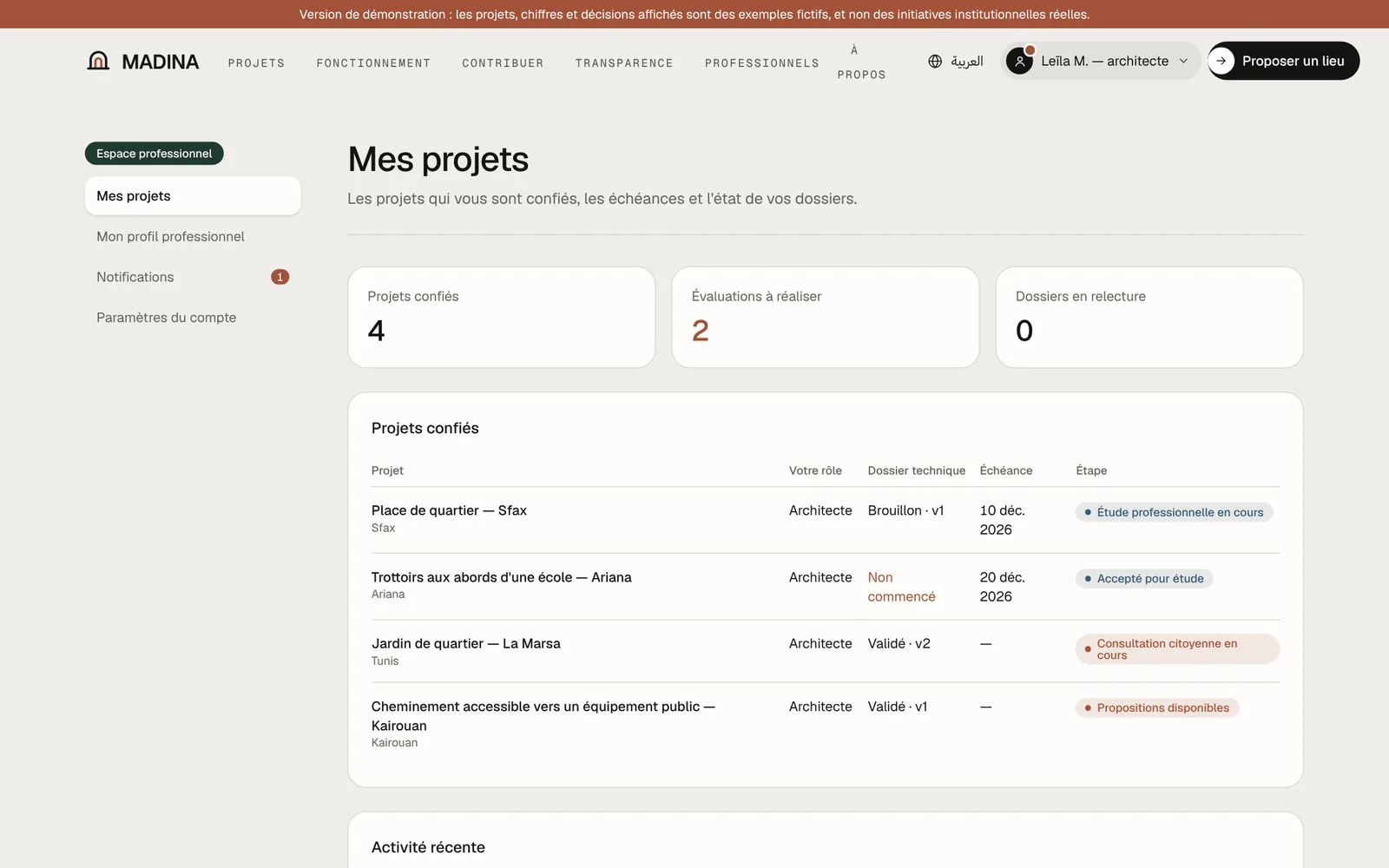
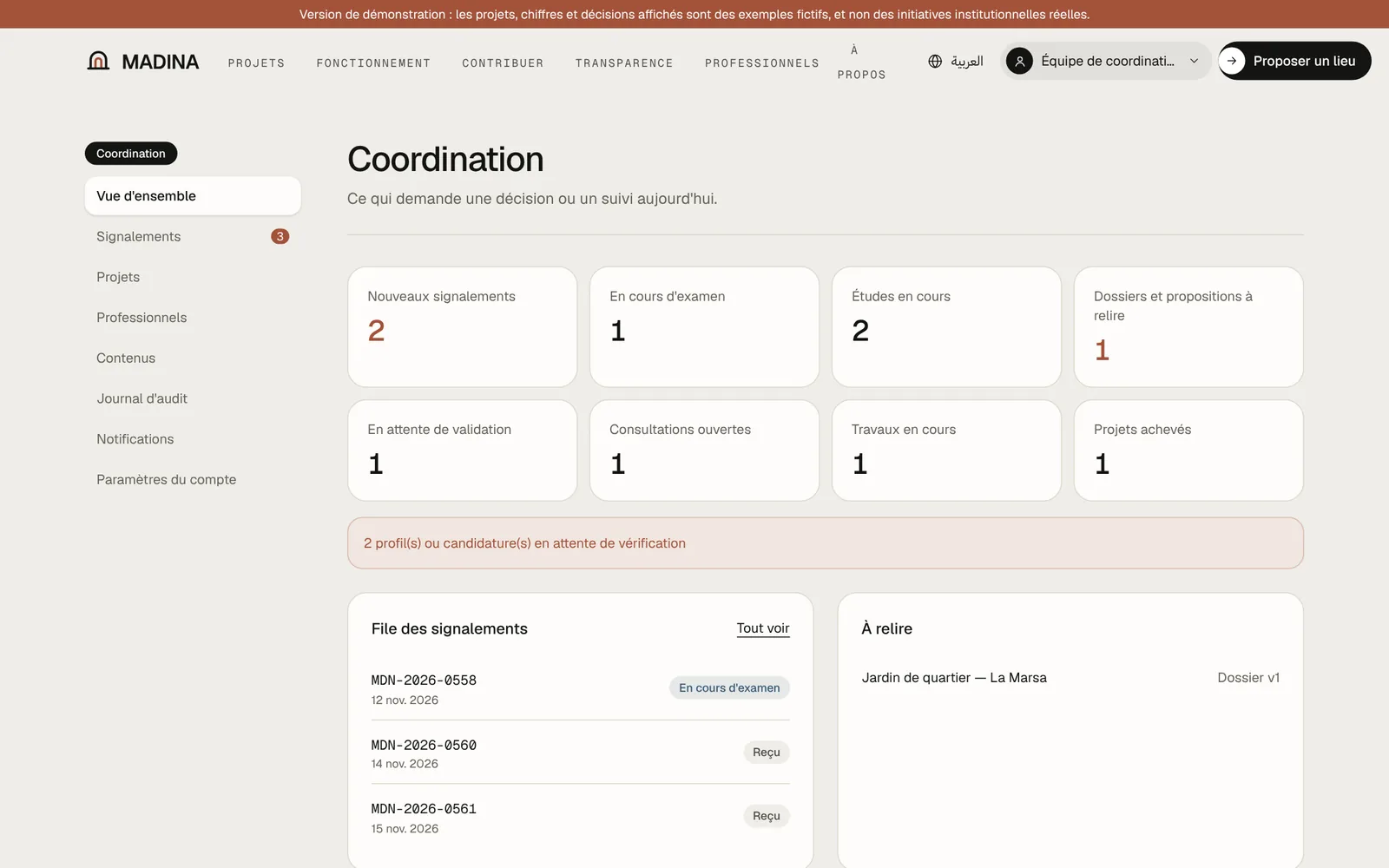
Three workspaces on the same data: the citizen account; a professional workspace with a versioned bilingual technical dossier and a printable export; and a coordination back office for moderation, project management, professional verification and an append-only audit log.
- 05
Governance enforced in code, not only in the interface: one vote per account and no edits, results hidden until the consultation closes, no money handled by the platform, decisions transcribed from the competent authority rather than issued by MADINA, and server-side permissions on every page and action.
- 06
AI where it helps and nowhere it could mislead: an optional Claude-powered rewording of a citizen's description that may only correct and clarify, never add a fact, and that the citizen approves before it is kept. Without a key the feature says it is not configured; nothing is simulated.
- 07
Arabic first, right to left, with a complete French edition, an art direction built on credited documentary photography and architectural plates, and an app that installs on a phone.
In use
Reporting a neglected place
A resident photographs a square used as an informal car park, locates it, describes it in Arabic and receives a reference to follow it. A coordinator checks it and accepts it into a project.
Preparing the design
An architect assigned to the project writes the technical diagnosis, uploads site photos and two design options in the professional workspace, and exports the dossier for review.
Asking the neighbourhood
Residents compare the published options and state a preference, once each. The result stays hidden until the consultation closes, then appears on the project page beside the technical recommendation, never in its place.
Following it to the end
The authority's decision and its reference are recorded, milestones are published as works begin, and anyone can read the whole history of the project on one page.
Screens
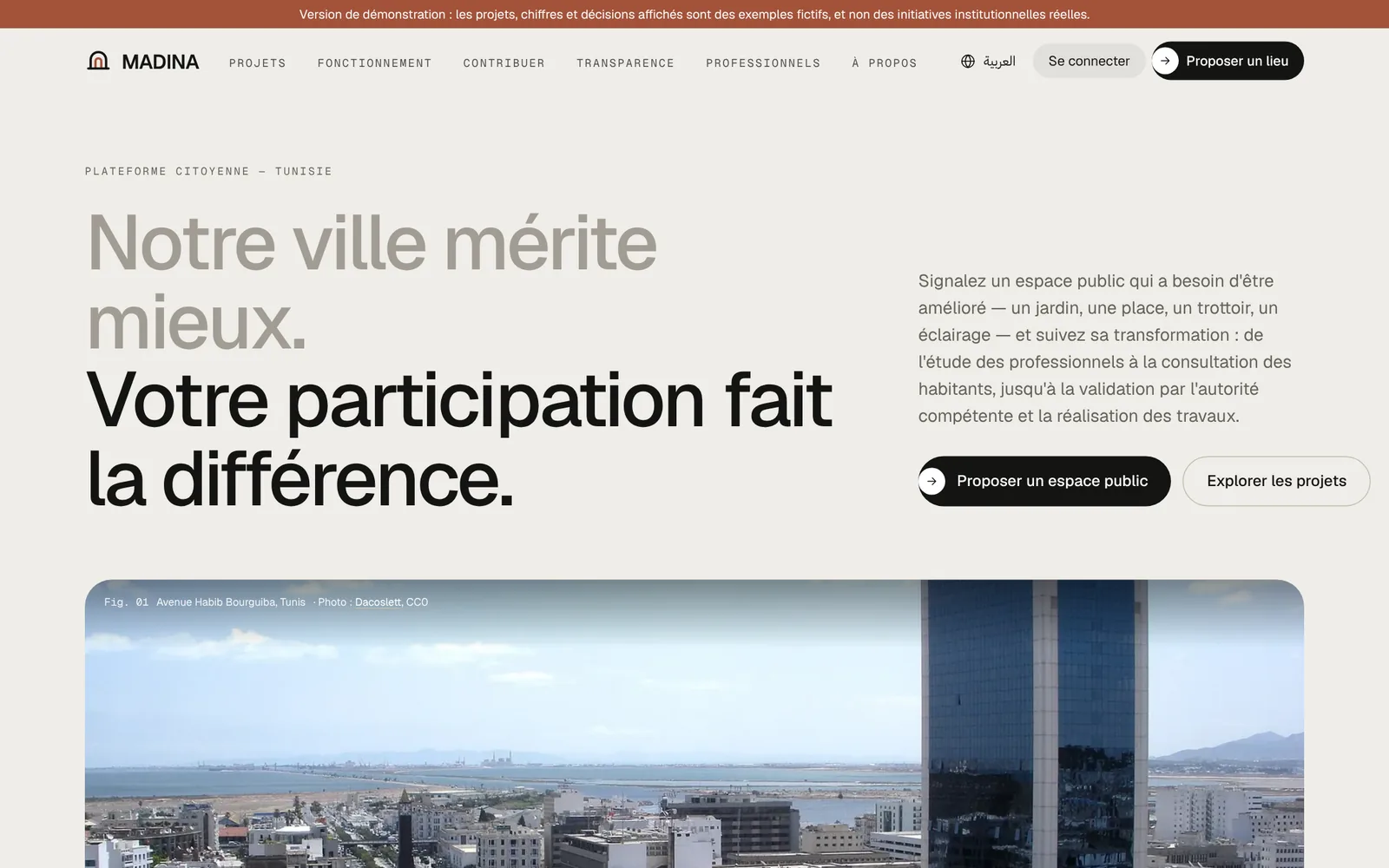
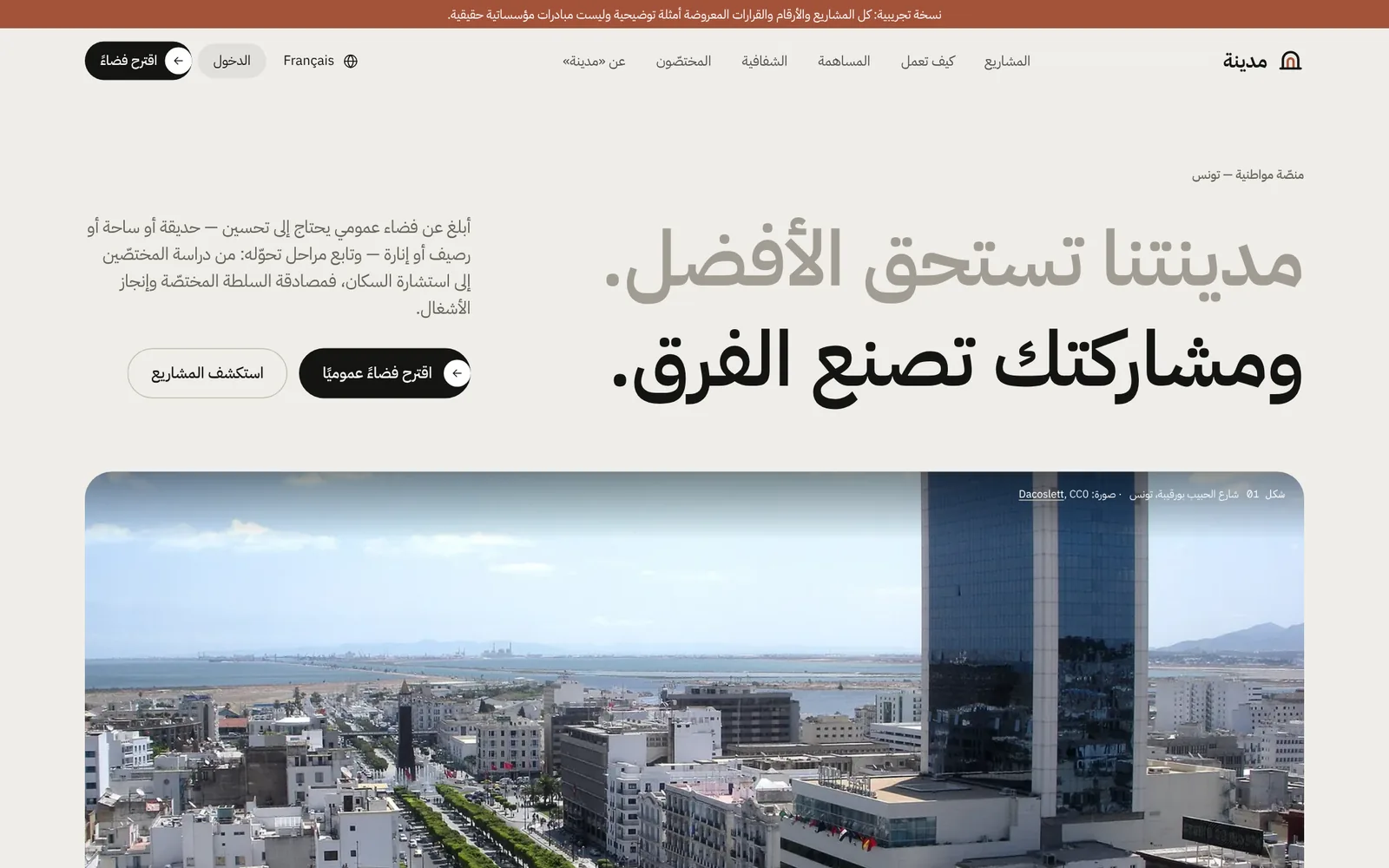
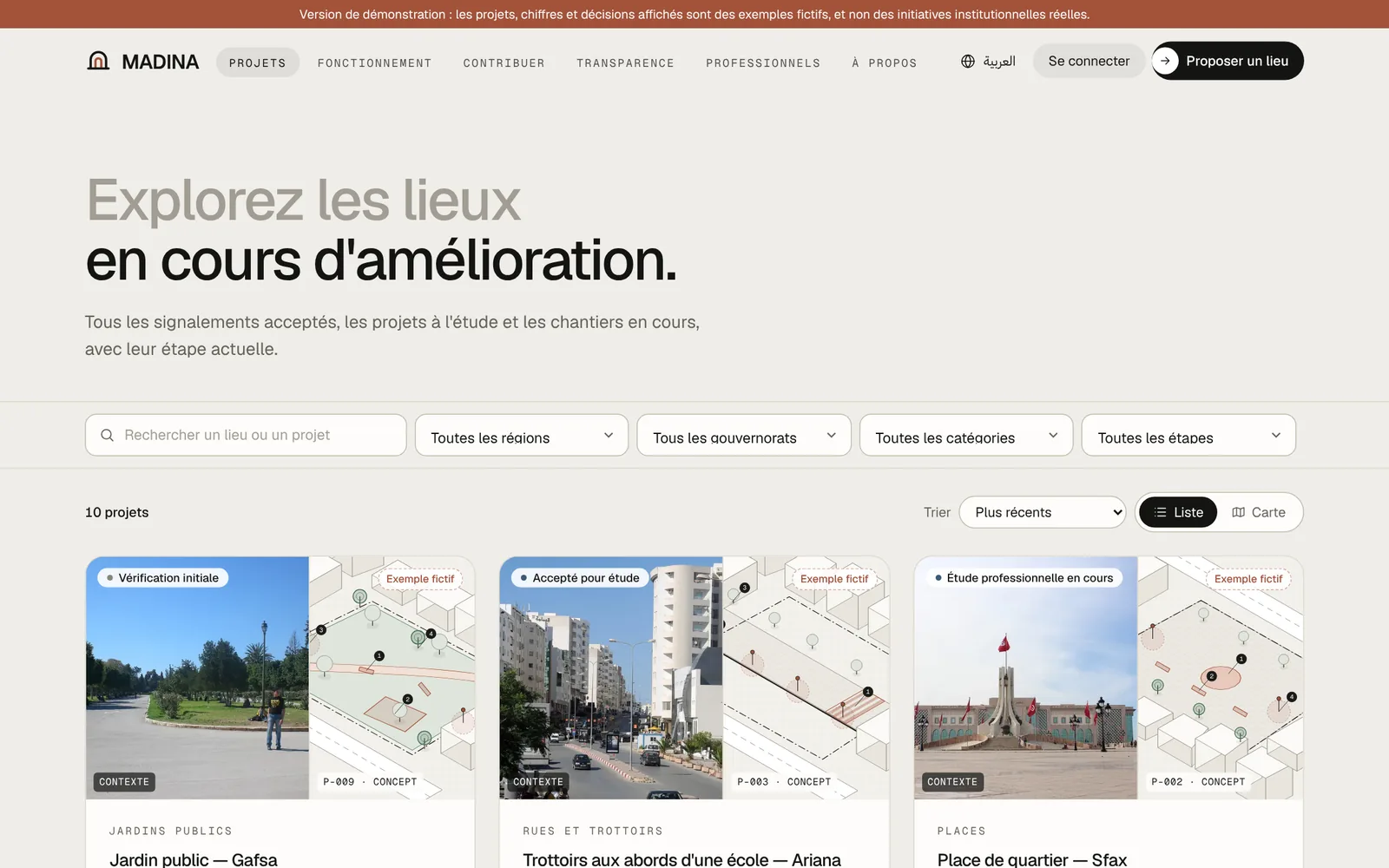
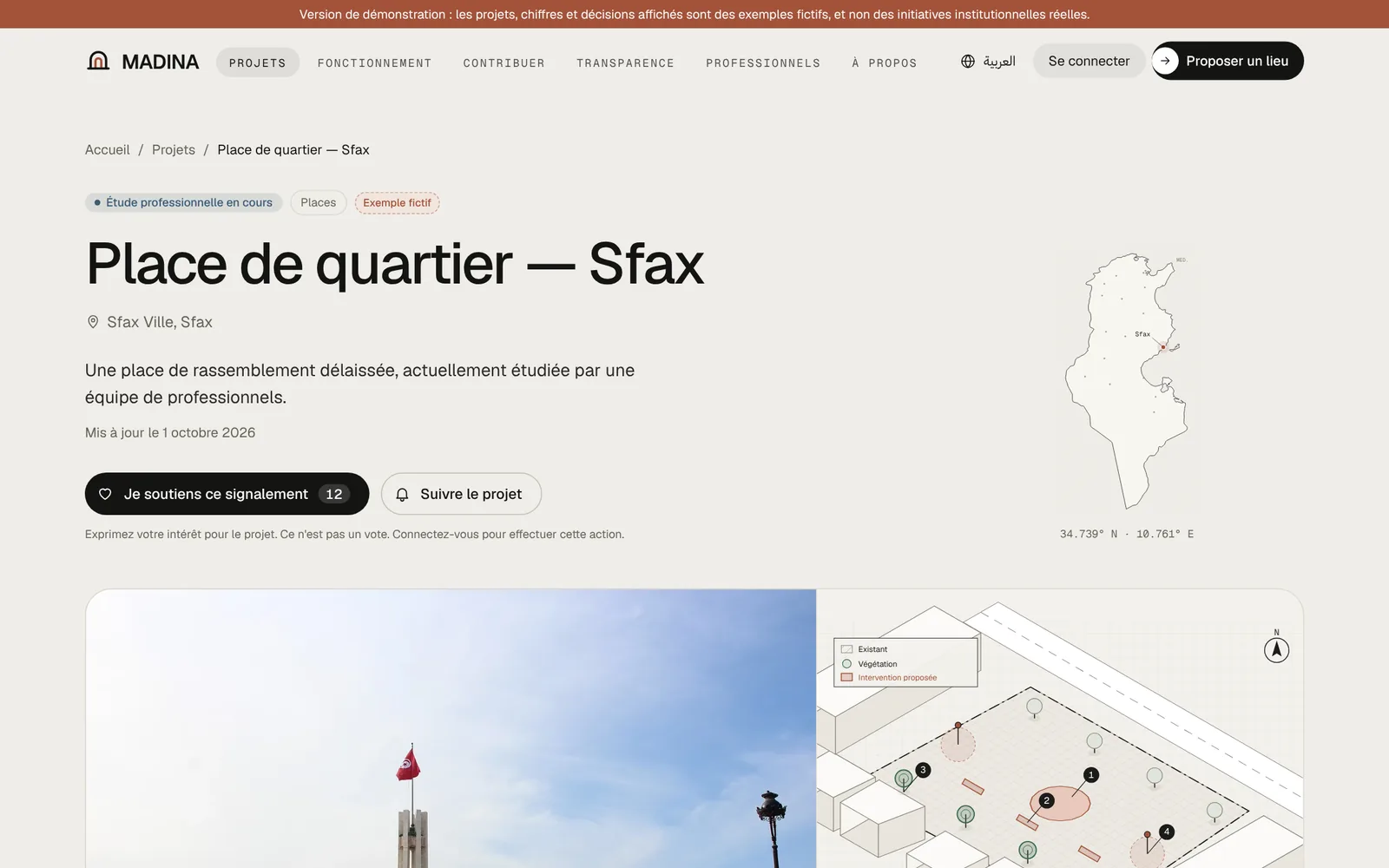
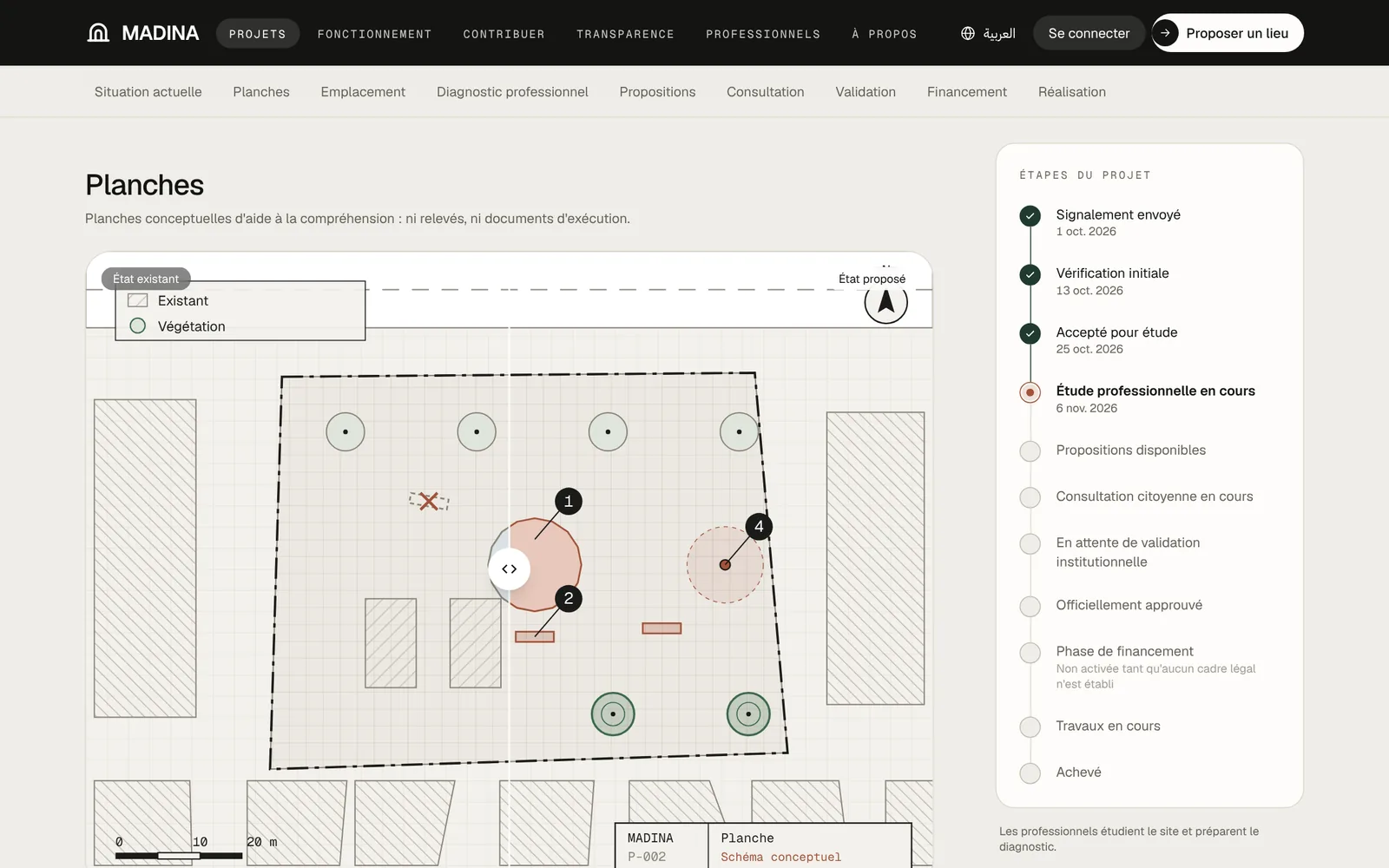
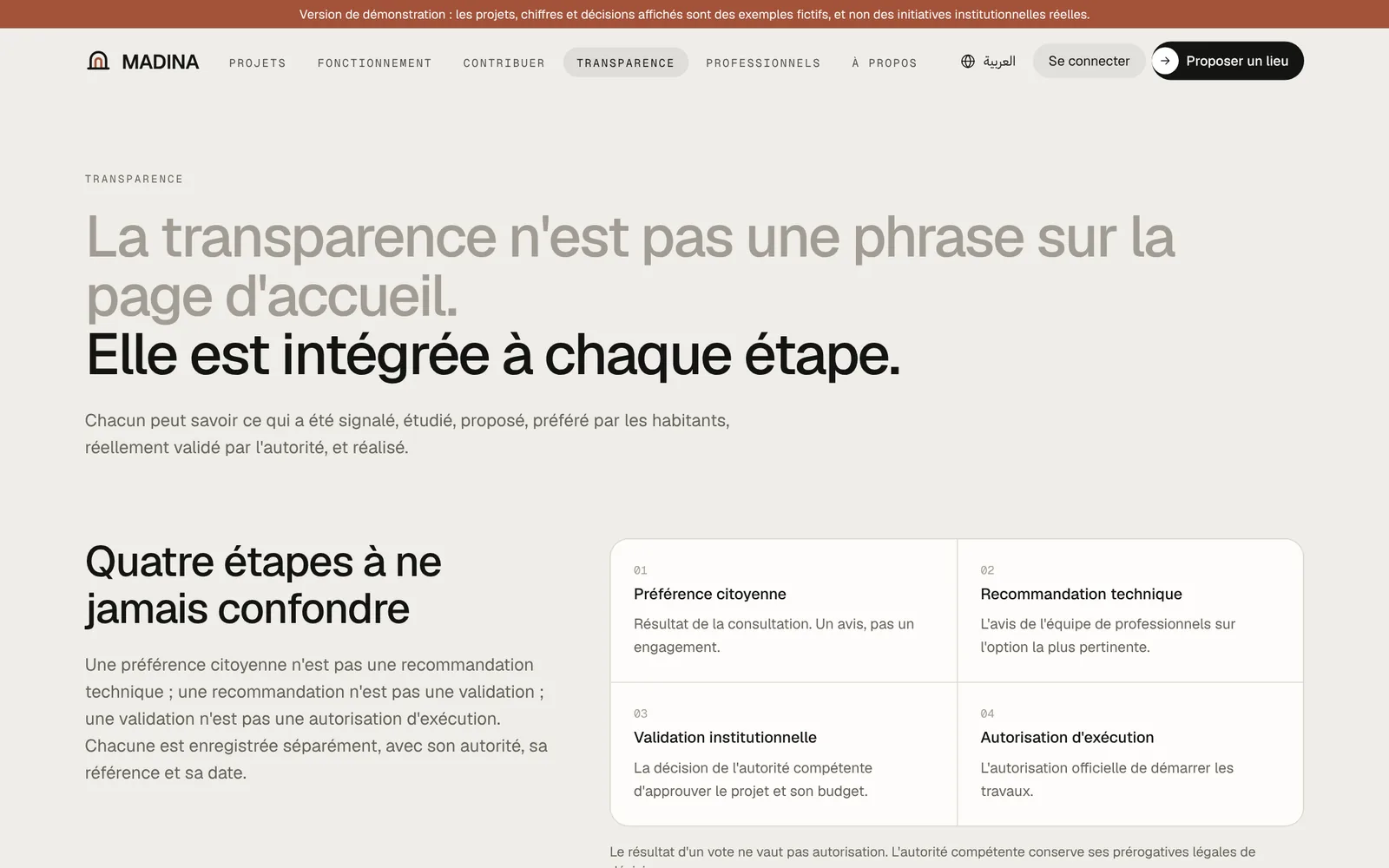
The home page in French: the promise, “Notre ville mérite mieux. Votre participation fait la différence”, two ways in (propose a public space, or explore the projects) and a credited documentary photograph of Tunis. A banner at the top says the version is a demonstration with fictional data.
Tunisia Go