Etihad Voyage
Client
- Etihad Airways (unofficial concept)
Project type
- AI Travel Companion · Concept
What I did
- Next.js 16
- React 19
- TypeScript
- Tailwind CSS v4
- Gemini
- Duffel API
- OpenSky Network
- Web Speech API
- EN / FR / AR (RTL)
Year
- 2026
Overview
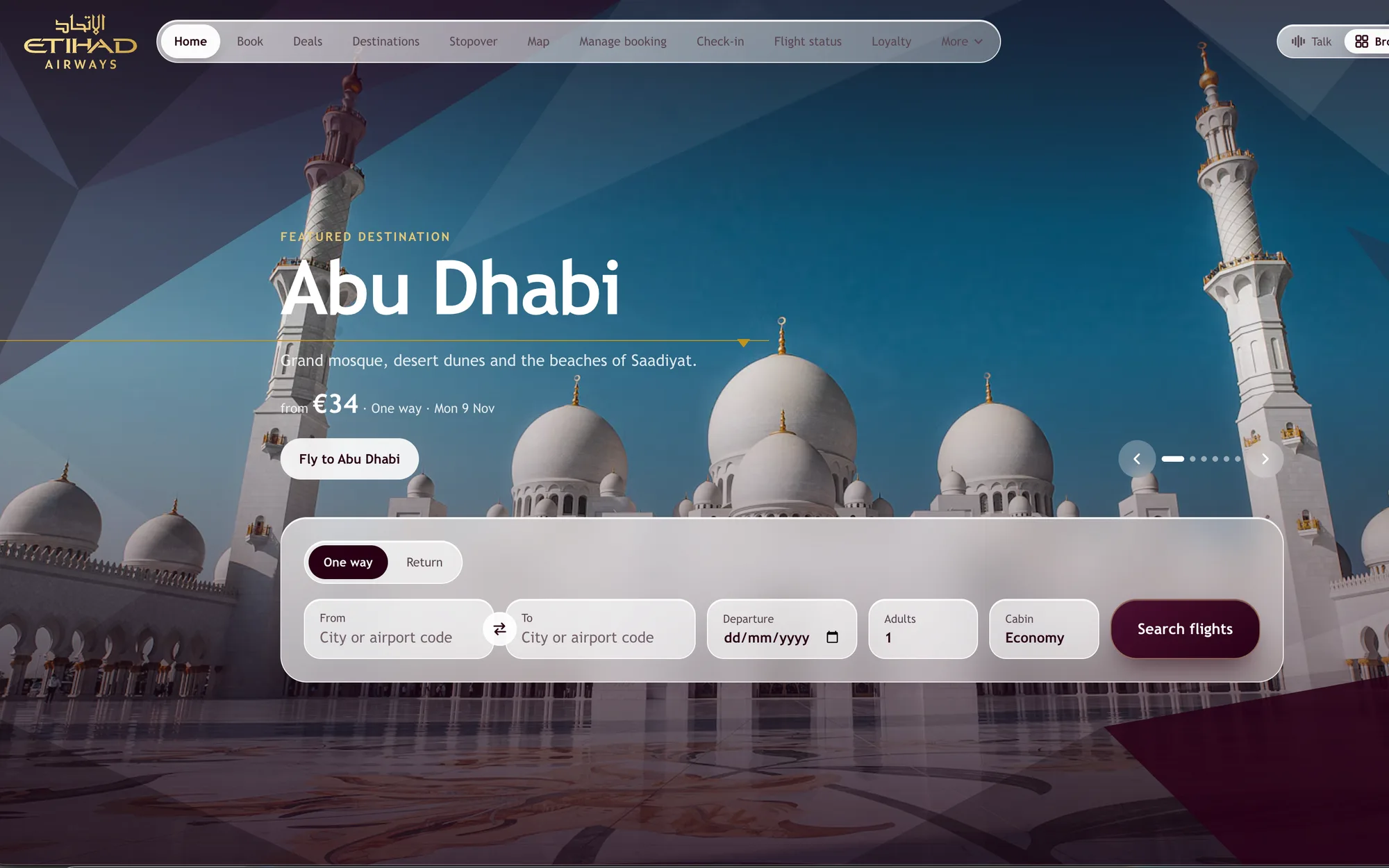
A self-initiated concept, not commissioned by or affiliated with Etihad Airways: what booking a flight looks like when you can simply say what you want. You describe an intention, Tokyo on Tuesday, arrive rested, and an AI companion composes the whole trip: one recommendation and two explained alternatives (Balanced, Fastest, Most comfortable) on a timeline you approve in two steps and can undo. Beside it stands a complete airline site, booking, deals, a fare map, check-in, stopover, loyalty and flight status, built on the same design system, in English, French and Arabic. Flights, seats and fares come from Duffel; nothing is invented, and where a source is missing the screen says so.
The problem
- 01
Airline booking still starts with a form: origin, destination, dates, cabin. The traveller already knows what they want, to arrive rested for a Tuesday meeting, and the form makes them translate it into fields.
- 02
Results come back as dozens of near-identical flights sorted by price. The trade-offs that matter, a tight connection or a 5 am arrival, are left for the traveller to work out.
- 03
AI assistants in travel tend to sound sure of things they made up: times, prices, availability. In a booking flow that is not a tone problem, it is a trust problem.
- 04
A premium airline brand comes with strict guidelines. A conversational interface with motion, glass and live states has to live inside them without diluting the brand.
- 05
Airline sites are usually left-to-right layouts with Arabic poured in, though Etihad's home market reads right to left.
The solution
- 01
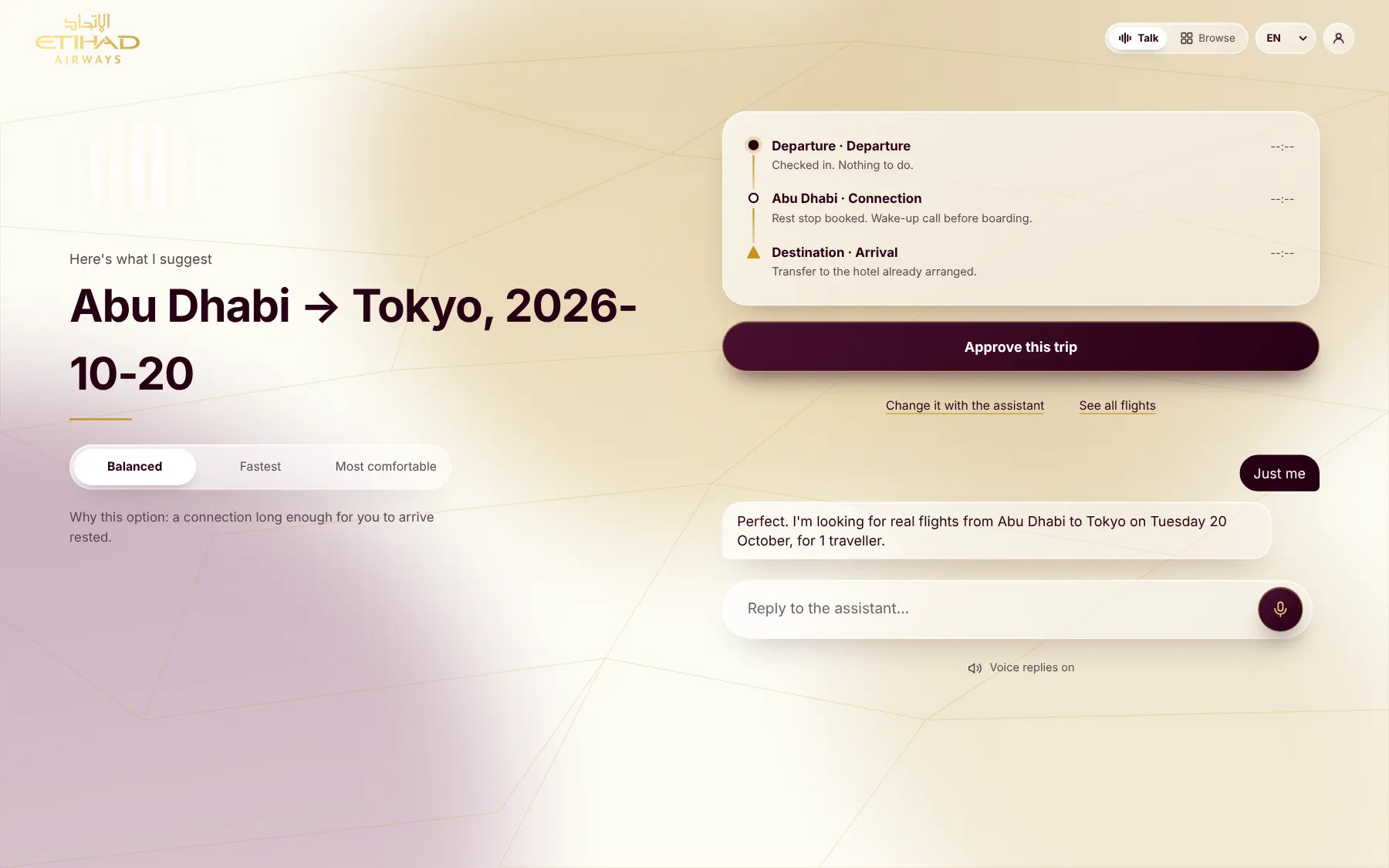
An AI companion that decides, then explains: one recommendation and two alternatives, each with its reason in a single line, laid on a timeline from departure to the hotel transfer. Approval takes two steps and can be undone.
- 02
Honest by construction. Gemini handles the free conversation, but its answer is checked against a schema before it reaches the screen, and simple rules take over when the model fails or no key is set. Flights, seats and prices come as they are from Duffel; when data is missing, times read --:-- rather than a guess.
- 03
It asks only what it cannot infer. The intention is read in English, French or Arabic (city, day, fast or rested), and the assistant comes back with the one question still open, where from or how many, instead of a form.
- 04
Voice in both directions: dictation through the browser's speech recognition, and spoken replies in the page's language that the traveller can switch off.
- 05
A live flight companion for the day itself: the plane's position from OpenSky and other ADS-B networks, refreshed every 30 seconds, the time where it lands, how much of the way is flown, and what is out of the window, ahead, behind, left or right, with nearby towns and their Wikipedia articles in the reader's language.
- 06
Talk and Browse, one trip. A switch at the top moves between the assistant and the full site, and the trip in progress follows: a one-way search in Book becomes the assistant's proposal, and See all flights in the assistant opens Book on the same route.
- 07
A design system written from Etihad's brand guide: aubergine, gold, ivory, sand, mauve, mist and earth as tokens, glass surfaces over a liquid background of three slow blobs, a faceted pattern behind everything, and one set of components shared by both modes on mobile and desktop.
- 08
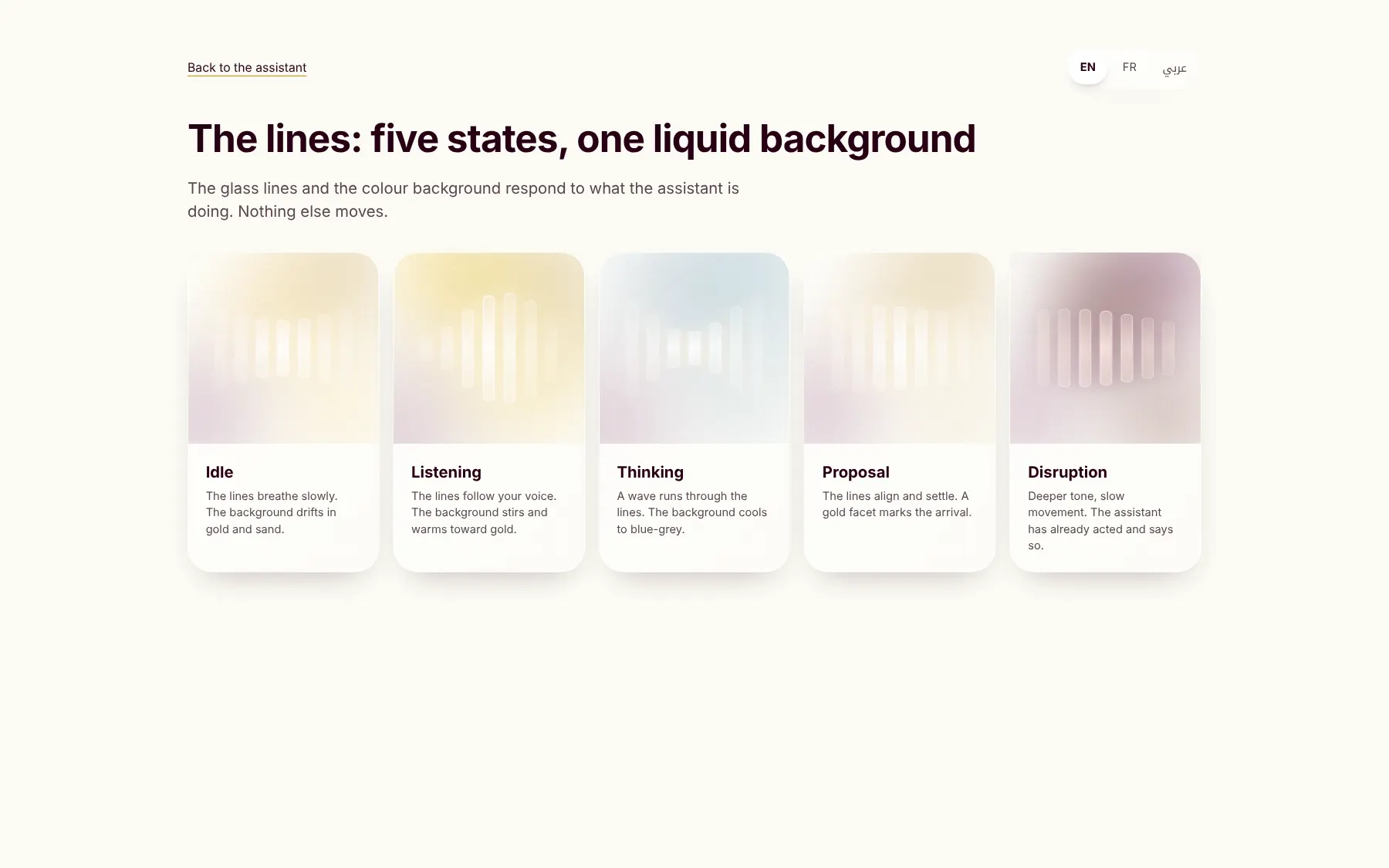
The assistant's five states (idle, listening, thinking, proposal, disruption) exist only as CSS variables: line rhythm, background speed and tone. Brand rules are enforced in code too: the logo never sits on the animated background, gold marks the journey and is never used for body text, and reduced motion turns every animation off.
In use
Booking by intention
A traveller types: Tokyo next Tuesday, I want to arrive rested. The assistant asks where from and how many, then lays out the Balanced option with its reason, Fastest and Most comfortable one tap away, and the trip as a timeline ready to approve.
Moving to the full site
The same trip opens in Browse with every flight on the route, the real seat map of the chosen offer, and a test order placed through Duffel: a real reference, no money moving, no ticket issued.
Following a flight
On the day, the companion shows where the plane is, the time at the destination, how far it has come, and the towns visible from each side of the cabin, refreshing every 30 seconds.
The design system at work
Every screen, from the fare map to check-in, draws on the same tokens, glass cards and facets, so a new page inherits the brand instead of reinterpreting it, and the assistant's states mean the same thing everywhere.
Screens

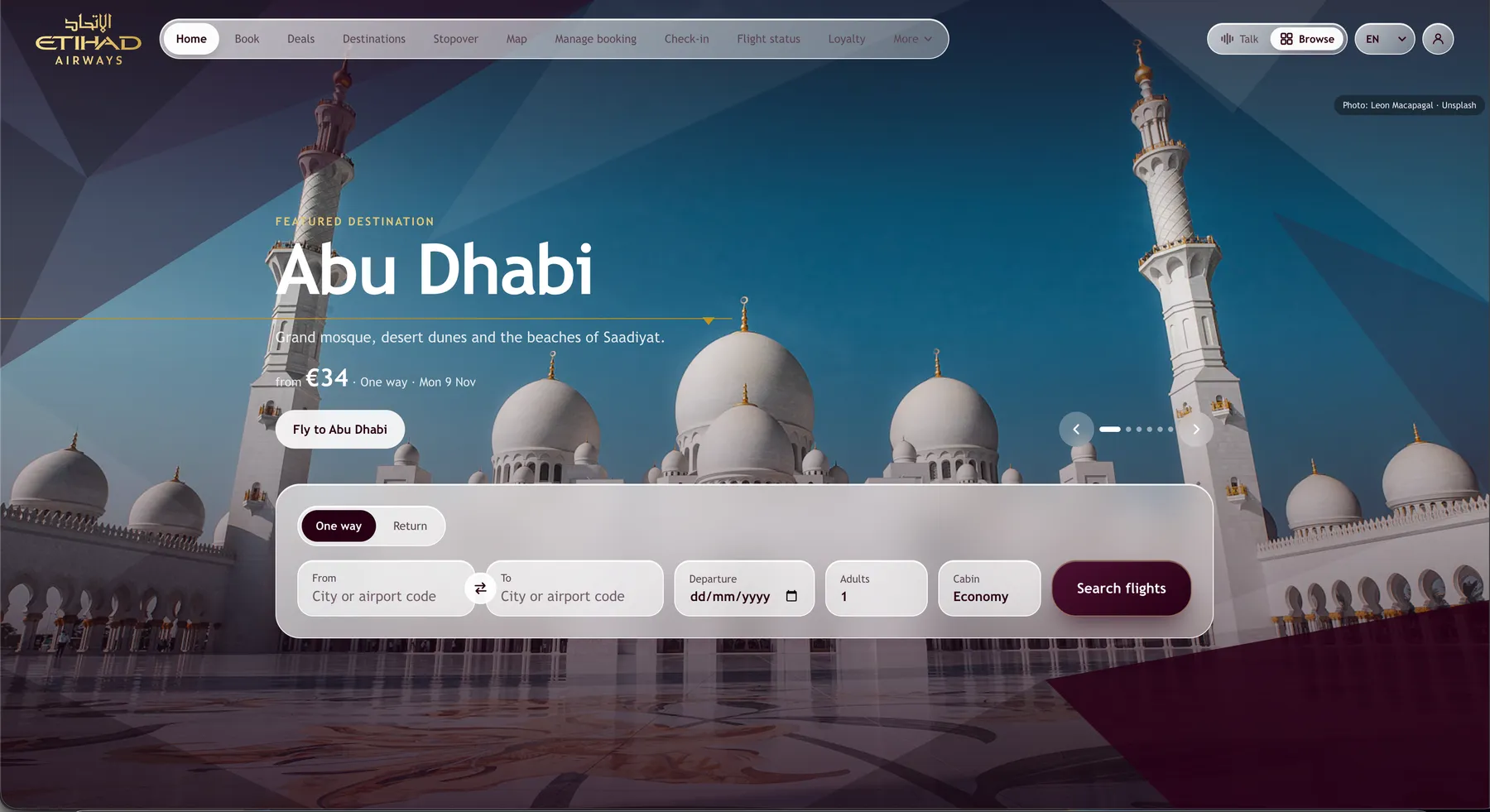
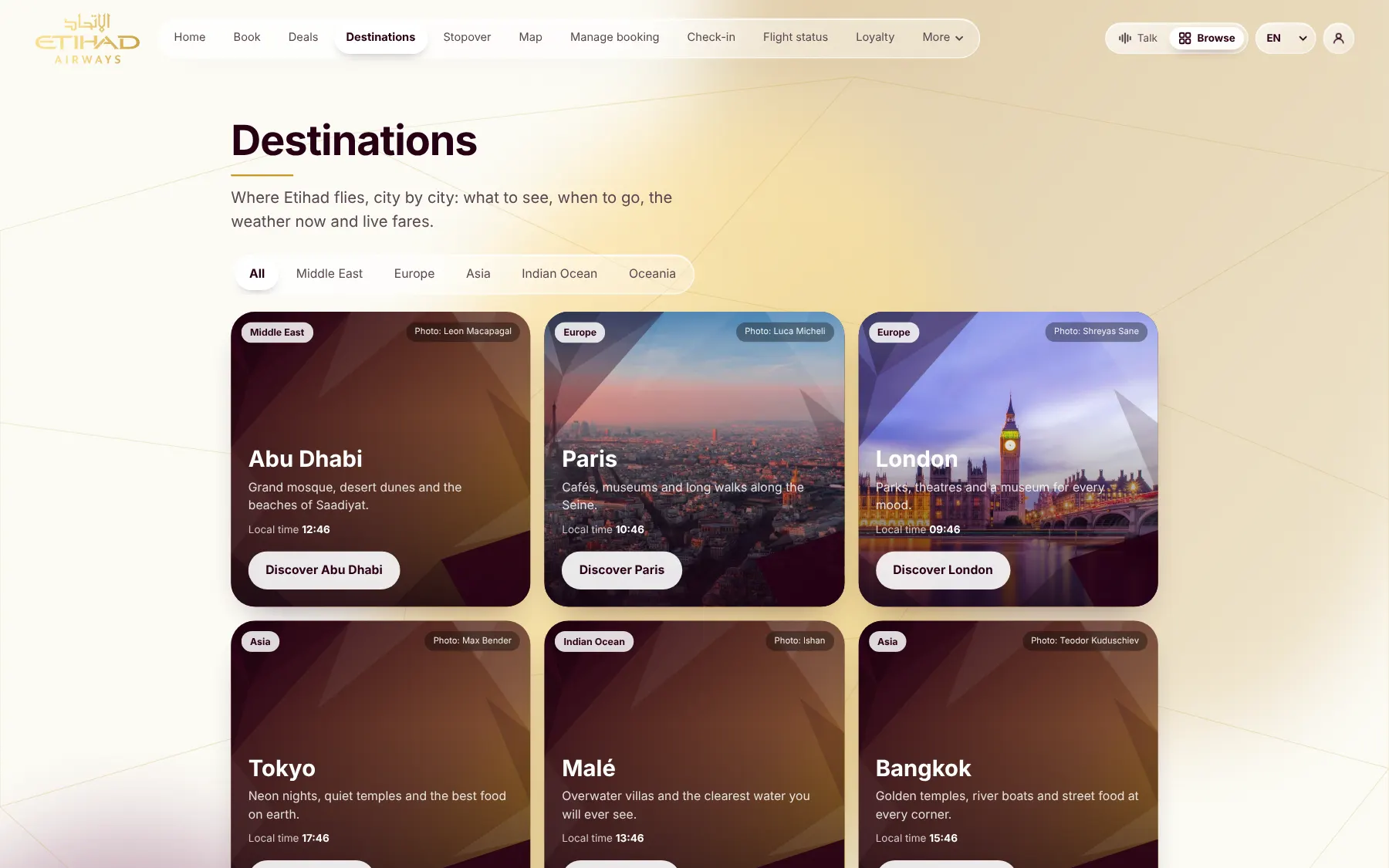
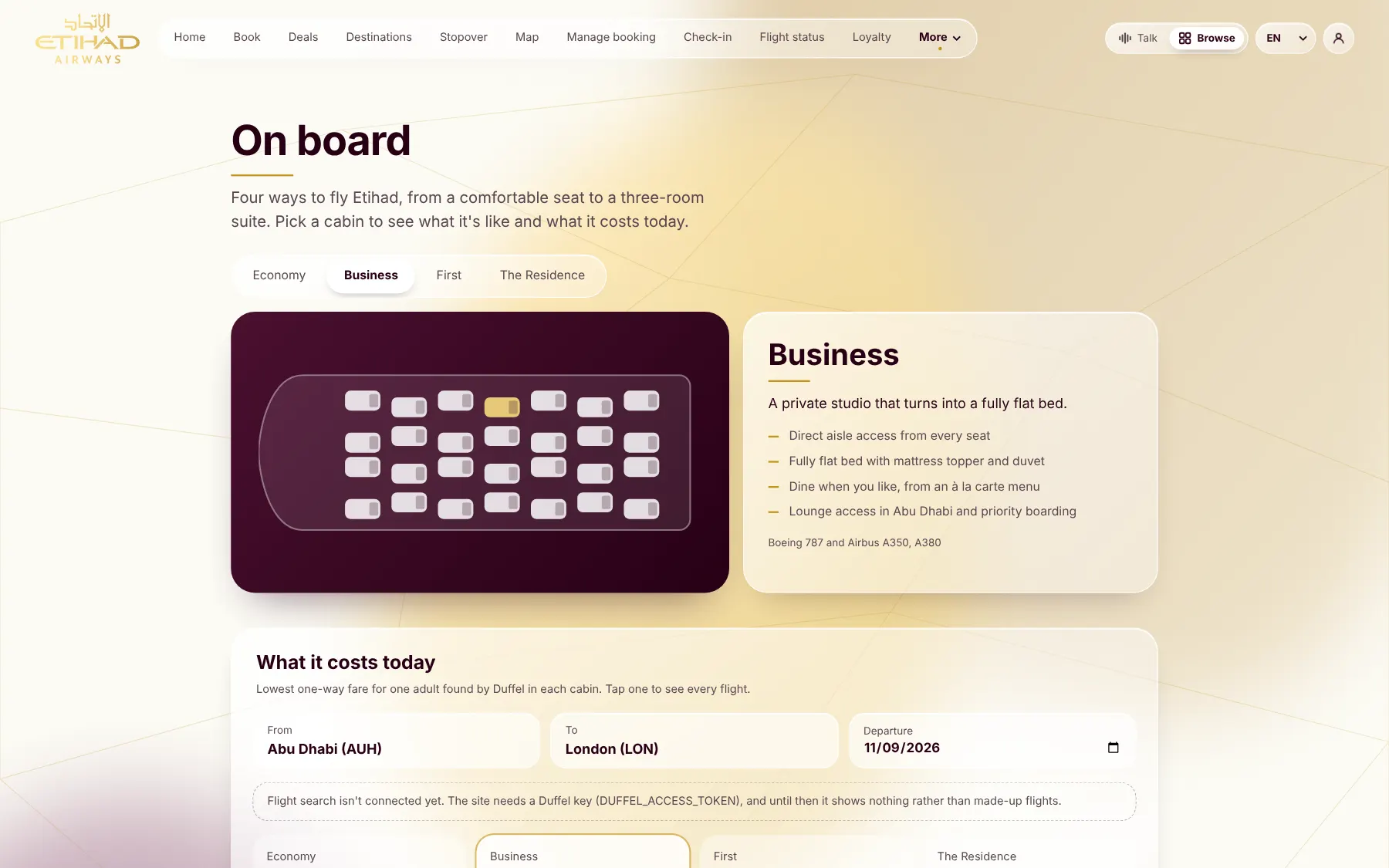
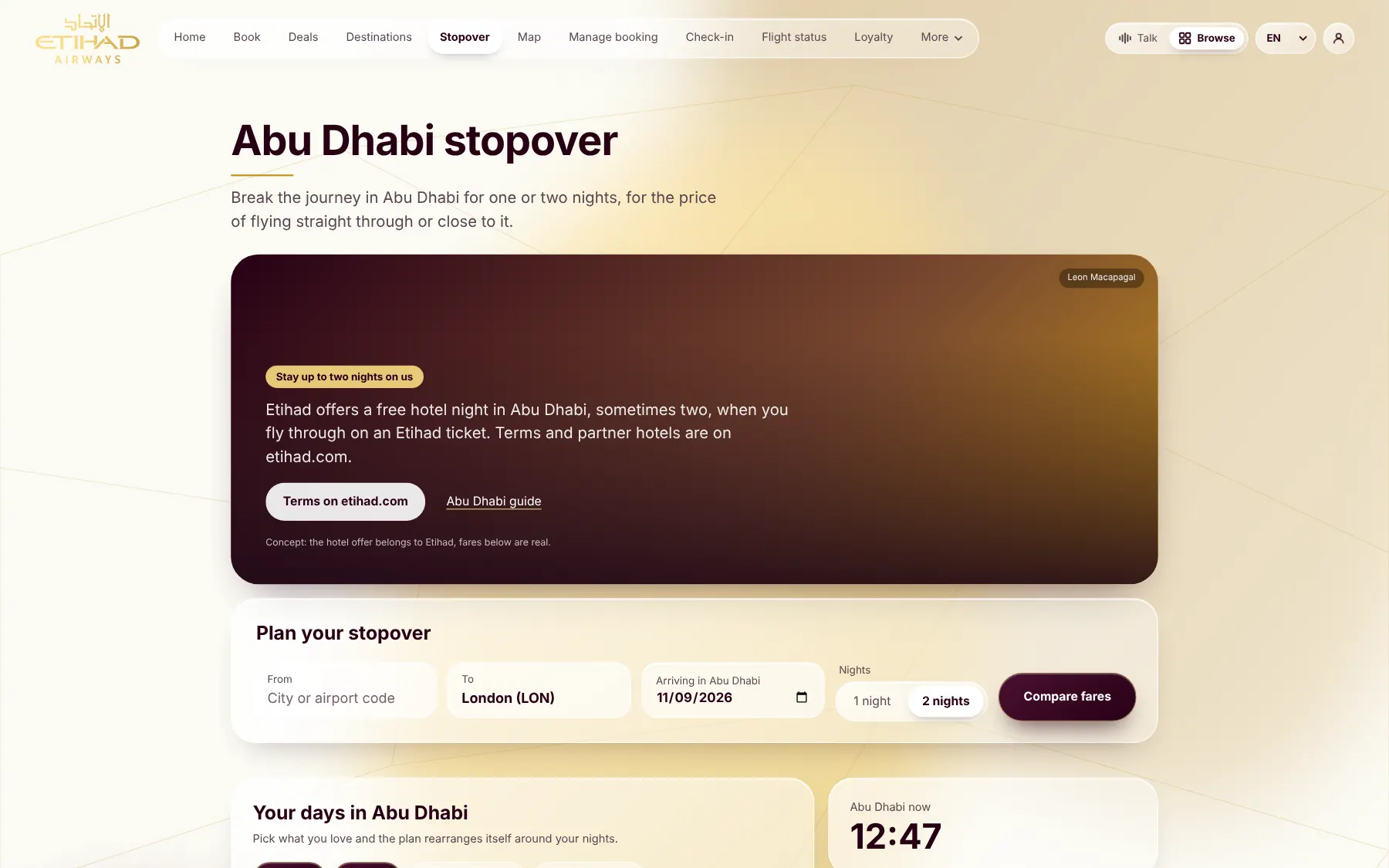
Every session opens on the logo traced in gold on aubergine, then filled, then lifted away like a curtain: once per session, skippable with a tap or a key, and absent when the reader asks for reduced motion. It is also the only place the logo appears large, on a still ground, as the brand guide asks.
Blackmind