Wavvy
Client
- Wavvy
Project type
- AI Music Studio
What I did
- Next.js
- TypeScript
- Tailwind CSS
- ElevenLabs Music API
- Web Audio API
- Canvas 2D
- Zustand
Year
- 2025
Wavvy turns a sentence into a finished track in about thirty seconds — vocals or instrumental, with stems, BPM and key attached. No instrument, no session, no plugins. Where it differs from the other generators is what happens after the audio arrives: eight professional workflows read the finished file and propose what the track is actually asking for next.
- 01
Generating a song has become the cheap step. Everyone can do it, so nobody is competing there any more — and none of the tools help with the part that decides whether a track ever gets used.
- 02
Generators hand you one track and clear the screen. The prompt, the seed, the tempo and the eight takes that came before are gone, so there is no way to work towards something.
- 03
One sentence buys you a vibe, not an arrangement. Anyone who knows the shape they want — a chorus that lifts, a verse that stays low — has nowhere to say so.
- 04
Feedback on audio lands as a paragraph under a player. “The drop is off” is useless when nobody knows which second you mean.
- 01
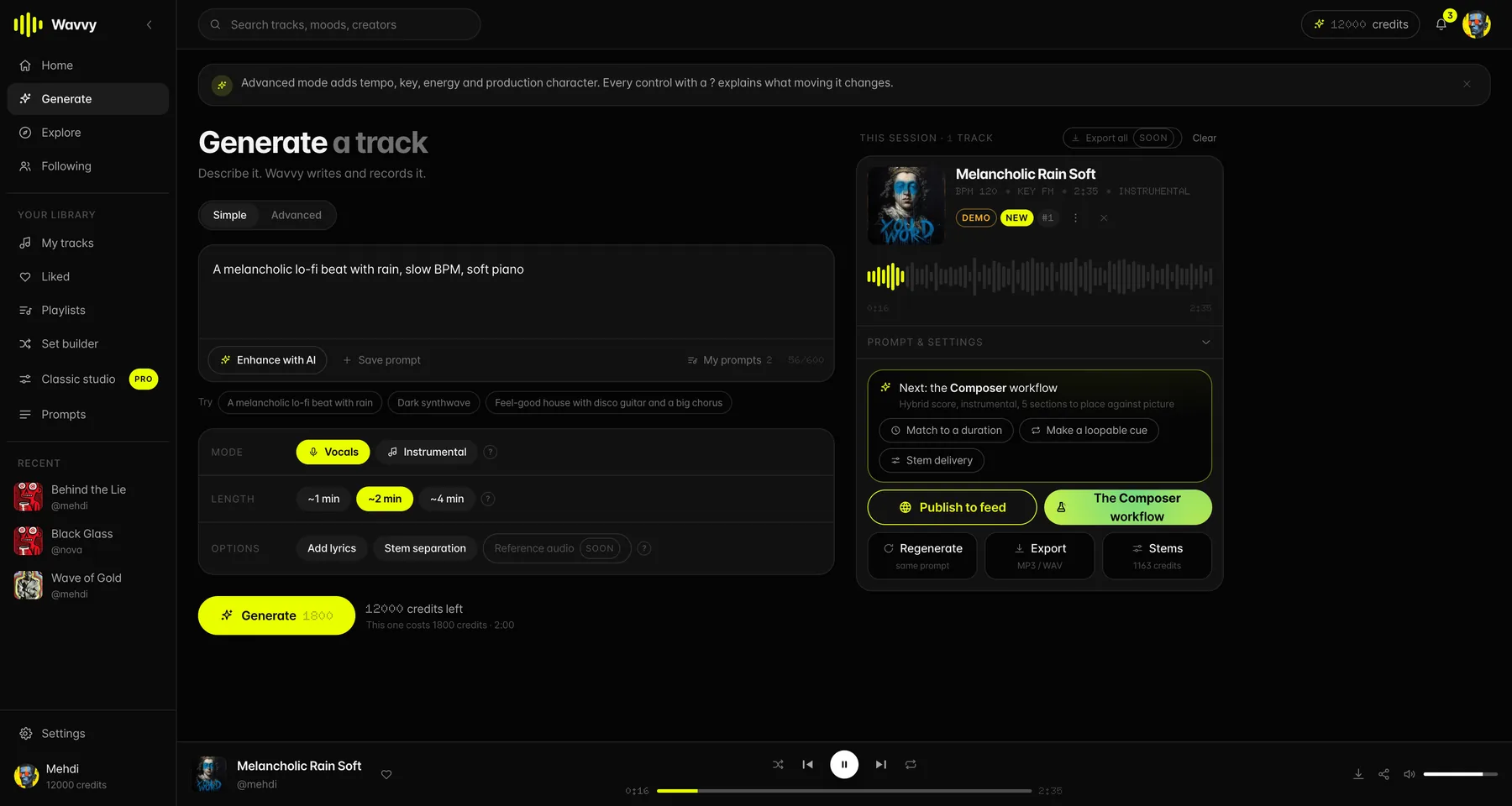
A session, not a slot machine. Every take stacks with its prompt, seed, BPM and key attached, so take #1 is still there when take #7 misses.
- 02
Advanced mode writes the arrangement, not just the vibe: sections ordered, styled and timed one at a time, with the total priced before it is spent.
- 03
Comments pin to the second they are about. The faces sit on the waveform where the note was left, and clicking one moves playback there.
- 04
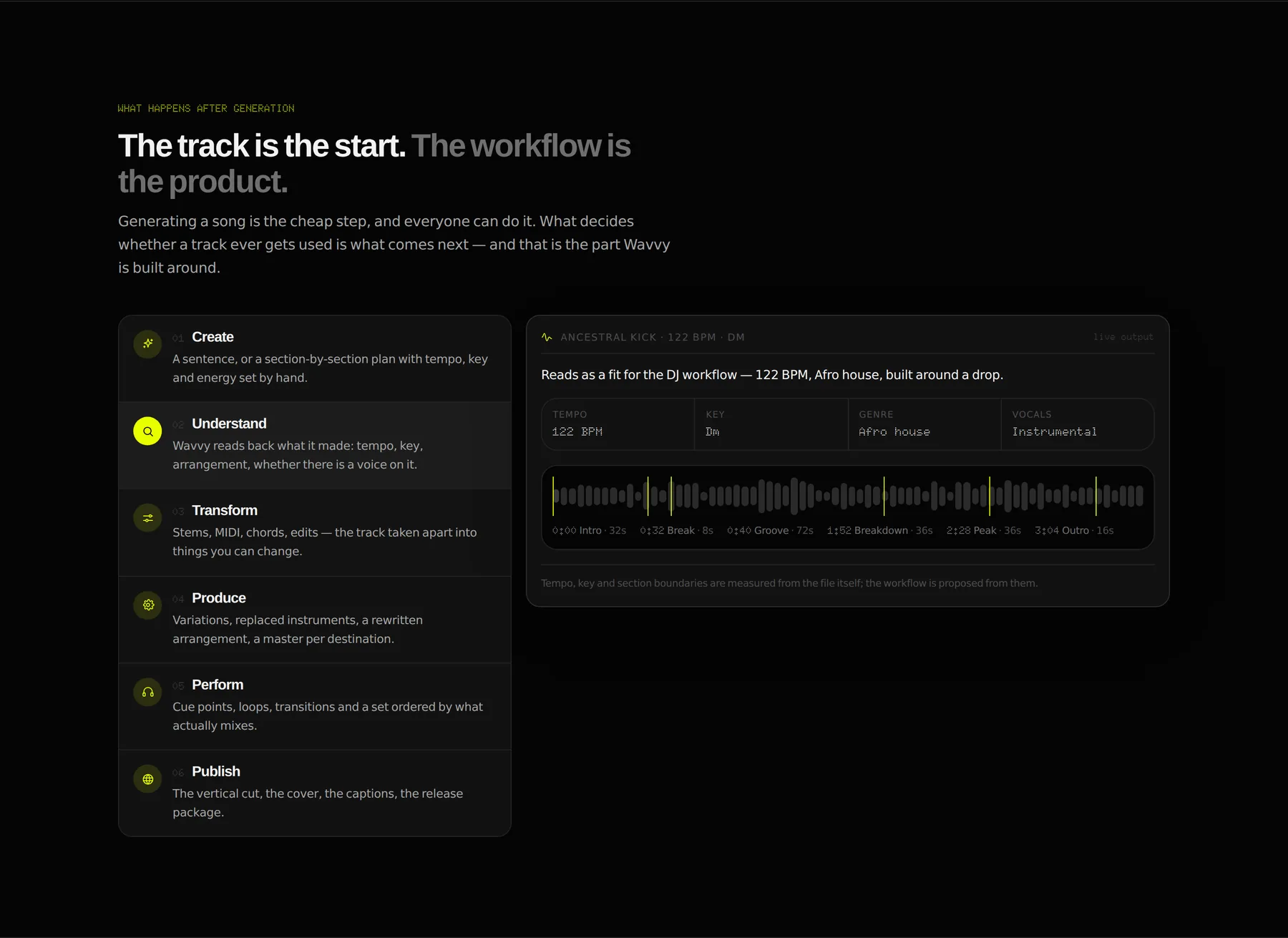
The track is read, not just made — tempo, key, section boundaries, whether there is a voice on it — and the workflow it needs is proposed from what was measured.
- 05
A landing page with no mock-ups in it: the recommendation cards call the product's own function on real catalogue tracks and print what came back.
The visitor who has never made a track
They type one sentence in the hero. The composer rewrites it into a brief a producer would recognise — style, instruments, tempo — and writes the lyrics too, before anything is spent. What they typed follows them through sign-up and is waiting, pre-filled, in the studio.
The DJ preparing a set
They ask for a DJ edit. Back comes 32 bars on each end to mix through, a clean acapella, cue points on the grid, and an order for the set built from which tracks sit within 6 BPM and a compatible key.
The producer who wants the parts
Vocals split off the instrumental, harmony exported as MIDI in the key the track is really in, and one stem regenerated while the rest stay untouched — with BPM and key on the card so the folder drops straight into a session.
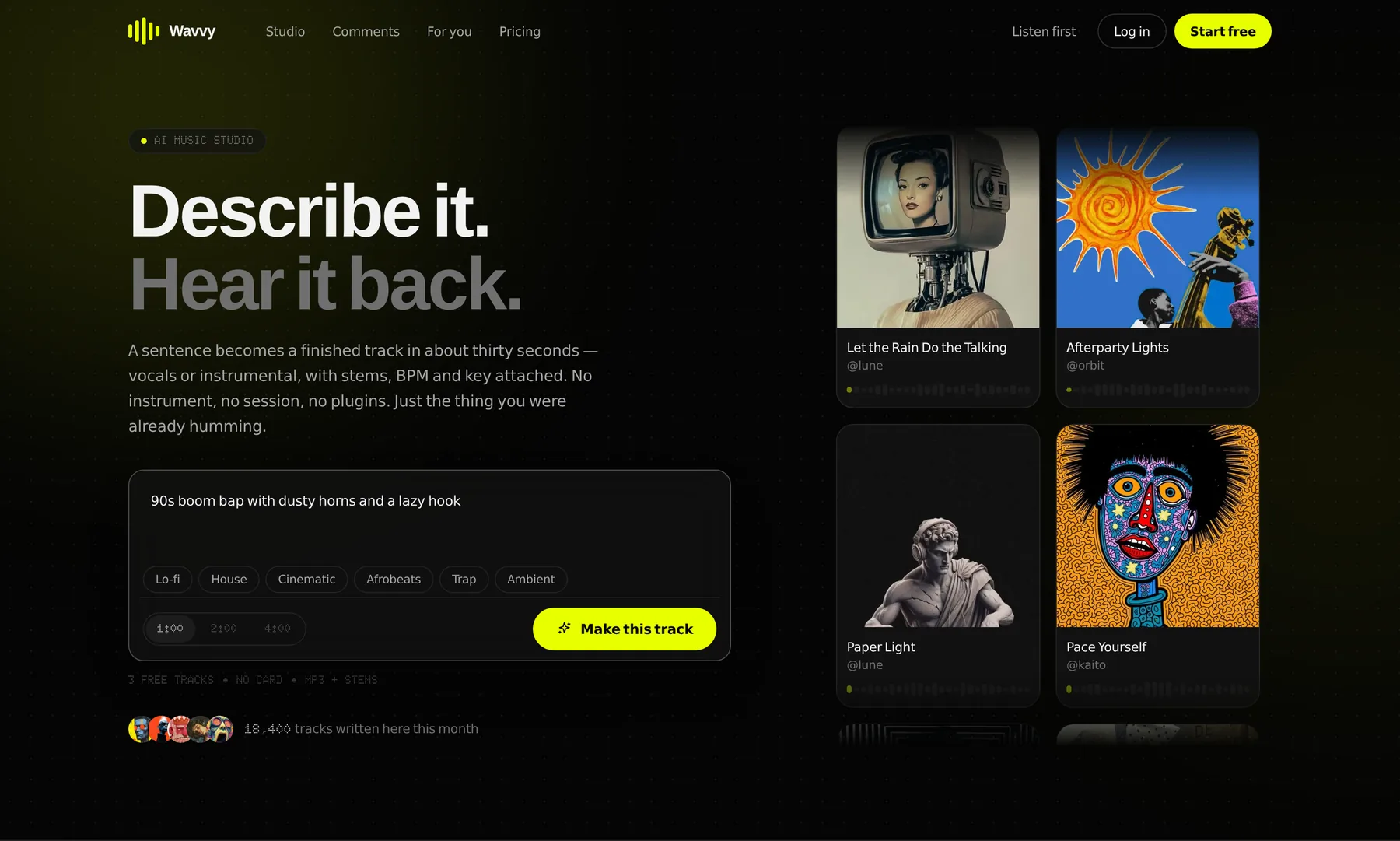
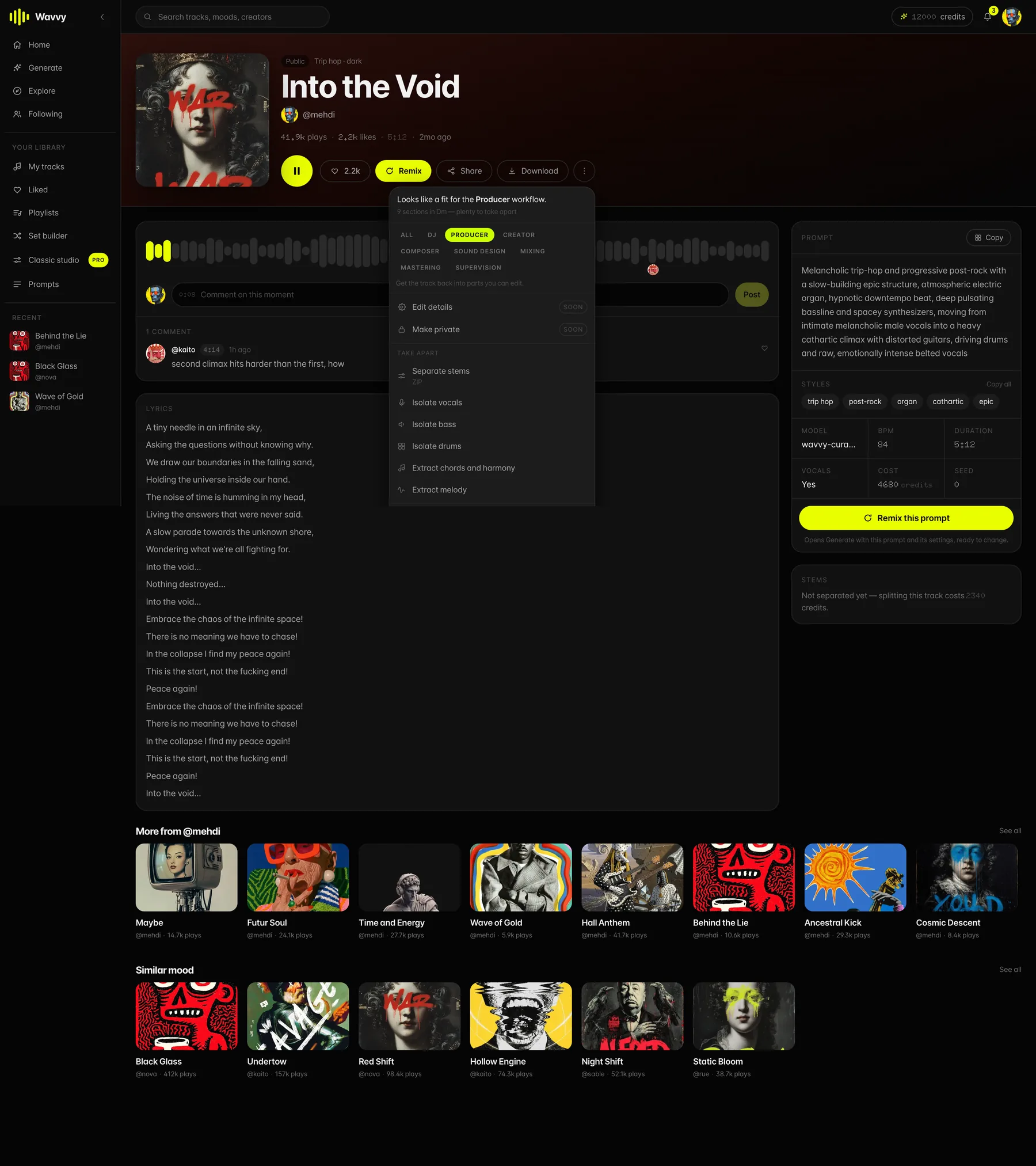
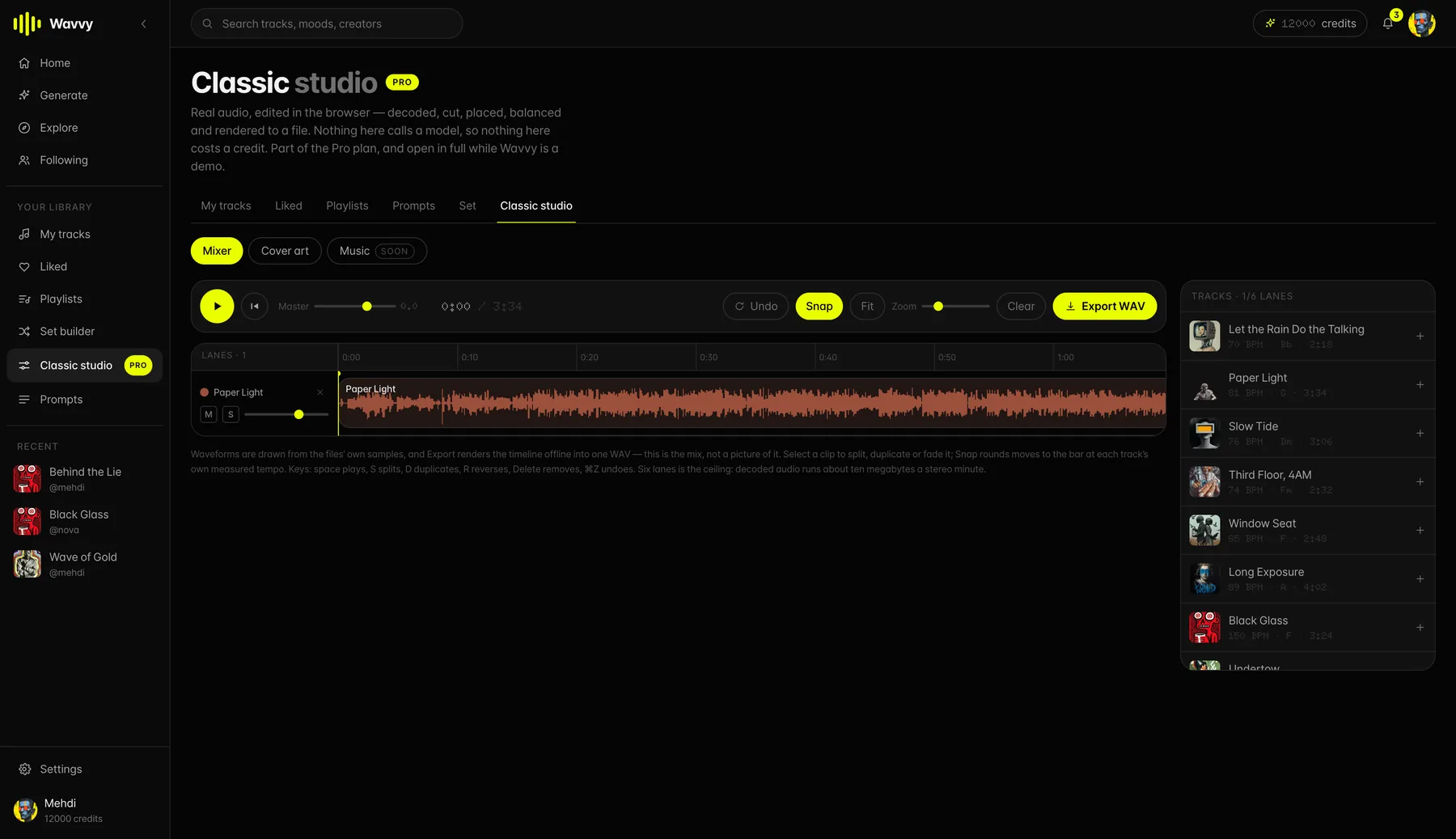
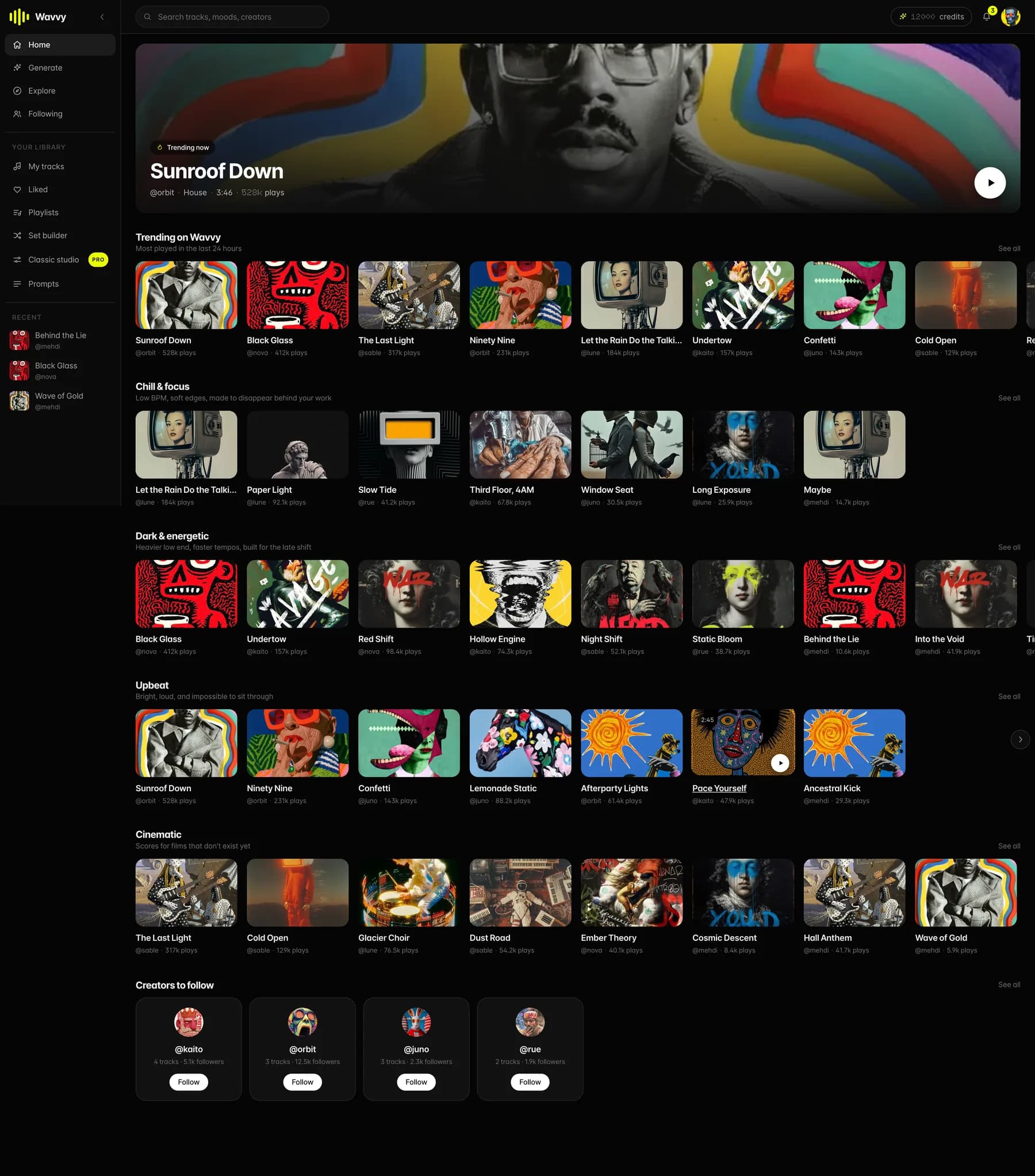
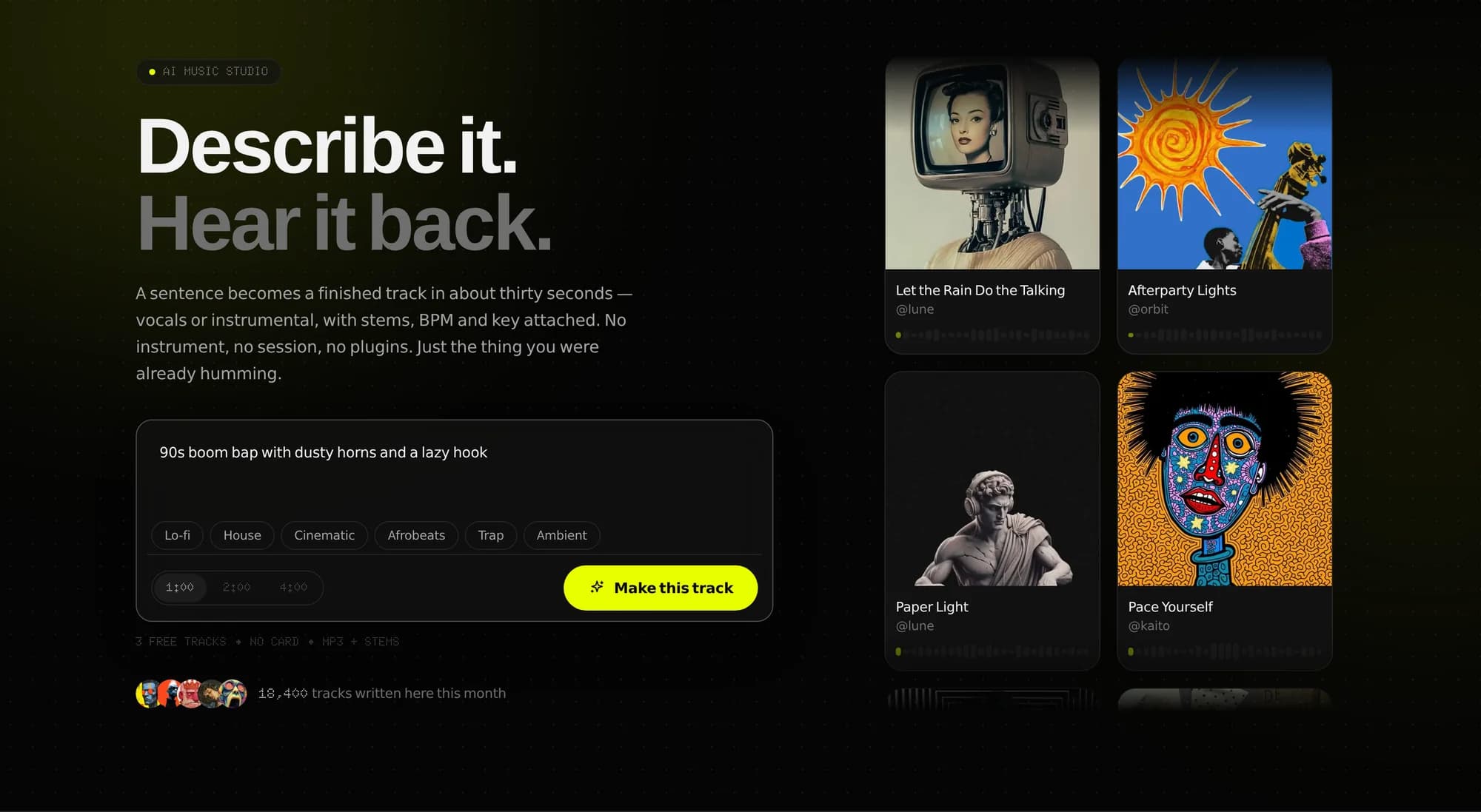
The hero is the product minus the account: whatever a visitor writes in that box is carried through sign-up and lands, pre-filled, in the studio. Beside it, real covers from the catalogue drifting in two columns.
Hexabot